
Please wait, I'm coming over...


 |
|
|
Last Changed 1/14/2016 |
||
|
Tire pressure is a concern of all RVers, motorhomes and
fifth-wheels. Improperly inflated tires can overheat and fail. |
||
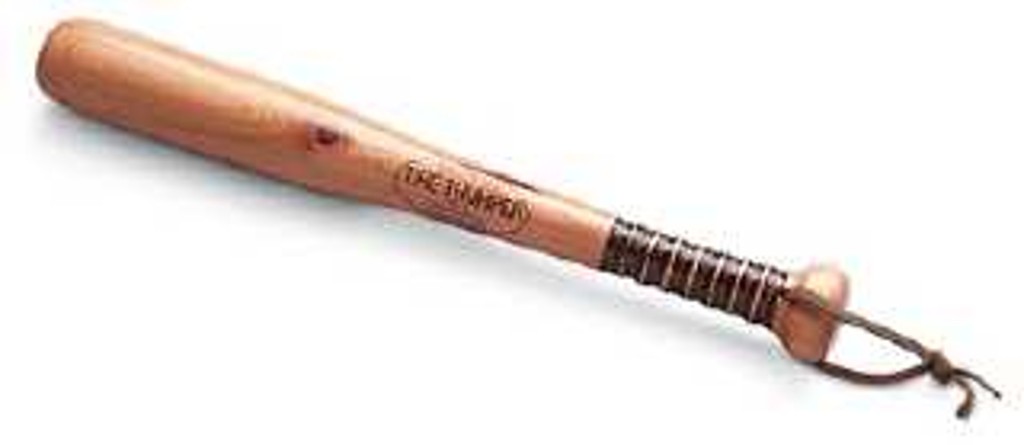 |
We started using a tire thumper to check tires when we stopped. A thumper is a weighted baton like a nightstick. A thumper does not tell you the exact air pressure of a tire. What you listen for is a ringing sound that is close to the tire next to it. This is especially good for checking the dual tires on the rear axle of the truck. With duals tires, one tire can go soft but will not show because the other tire holds the axle up. The axle is level but the good tire is carrying twice the load. | |
click on image to enlarge |
||
|
With a thumper, you can quickly check the tires on the truck and trailer for going soft because a soft tire will not have the same ringing sound. We stayed a month at Diamond Campground in Woodland Park, Colorado. Jack Mayer and his wife Danielle were workamping at the park. Jack convinced me to invest in a PressurePro tire monitoring system. Jack’s main point was that a tire monitoring system will constantly check the tires so we would learn of a problem before a periodic stop. We had gone through a blow-out on our practice motorhome, Training Wheels. The left rear tire on the tag axle blew on our way to Orlando. We were lucky that the blowout did not cause loss of control but it did rip up the wheel well. That blowout was due to a sidewall failure from a tire being too old. We had replaced the front tires on Training Wheels because they were showing some checking. The rear tires looked fine but they were over seven years old. A clear example that it does not matter how good tires look, at seven years they need to be replaced. A tire monitoring system would not have prevented the blowout we experienced with Training Wheels. However, we could appreciate the value of preventing such events with a tire monitoring system. |
||
Types of tire monitoring systems.There are two basic types of tire monitor systems available: those that attach to the valve stem (like PressurePro), and those that place sensors inside the tire (like SmarTire). There are pros and cons to both types of systems. The largest negative to the internal system is the difficulty and expense of installation. SmarTire, although difficult to install, does report internal tire temperatures as well as pressure. If you think you would like this feature, they are worth checking out.There are a number a systems on the market that support 12 or more tire positions, and use the valve stem sensor to transmit pressure information. However, until PressurePro was developed there were significant issues with each of the systems, in my mind, at least. Some systems require relays on the trailer and truck, since they will only transmit a short distance. Some systems require the tire transmitters to be custom built for a specific tire pressure. This means you Can not move the sensor from the trailer to the truck or in the case of the truck, front the front to rear wheels. This also means that if you decide to upgrade tires on the trailer from (say) E rated tires (at 80psi) to G rated tires at 110 psi, a replacement of the transmitters is required. There could even be a requirement to change tire pressure because the loading of the trailer or truck has changed. The SmarTire system looked the slickest, because that system monitors tire temperature as well as air pressure. However the value proposition declined rapidly when I had to consider the dismounting of 12 wheels, dismounting 12 tires, installation of 12 transmitters, remounting of 12 tires, and finally remounting of 12 wheels. I was also concerned about the possible damage of a transmitter by a tire technician working on a wheel and not being careful. |
||
PressurePro has the following desirable characteristics:
Pressure Pro Negatives:
Balancing all the pros/cons, I think this is the best valve stem system available. |
||
Installation |
||
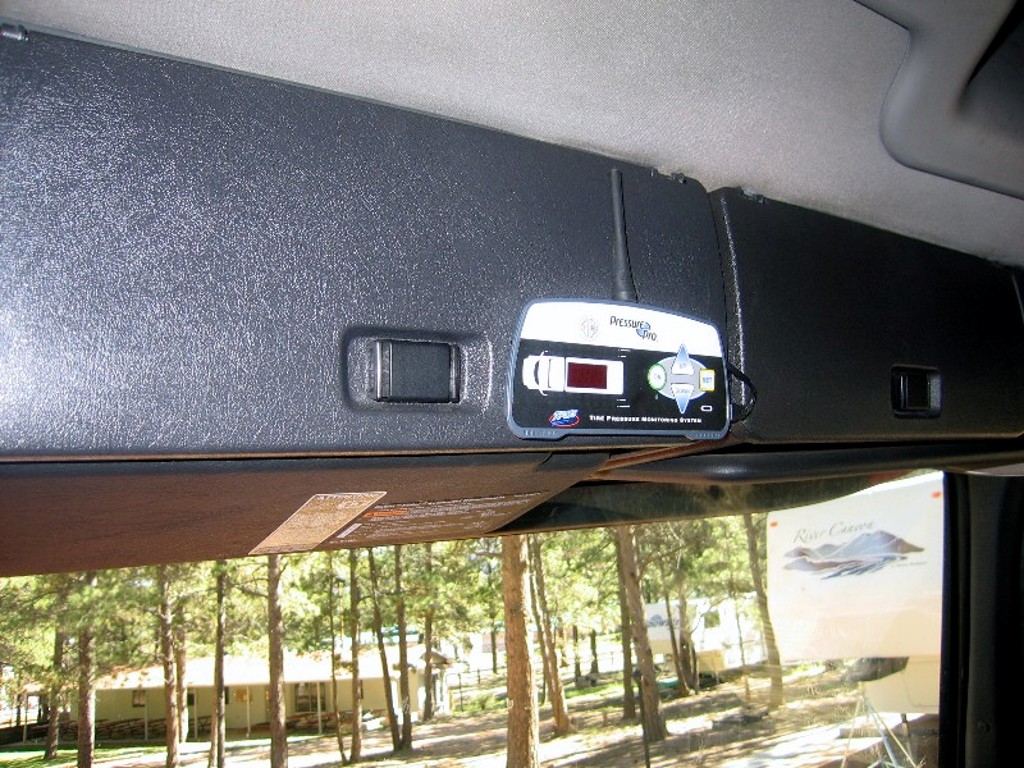 |
We mounted the PressurePro Monitor on the center overhead compartment door with Velcro strips. We ran the power cord through the overhead compartments, down the doorpost and across the dash to the fuse block. | |
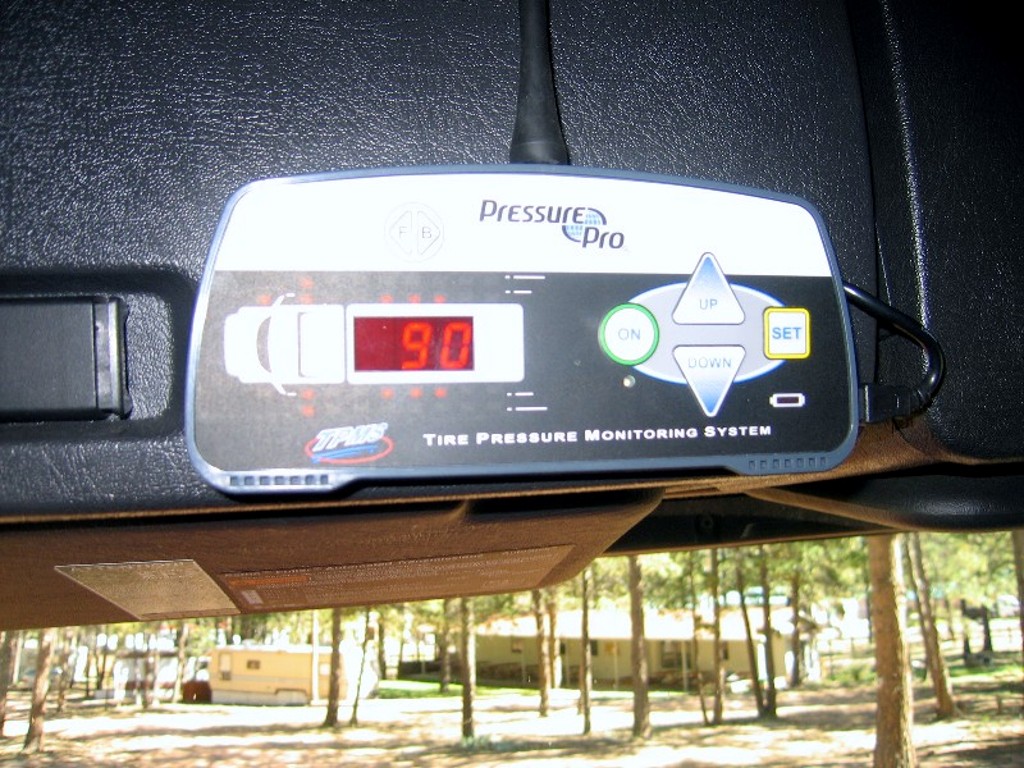 |
A close-up of the PressurePro Monitor displaying one of the wheels tire pressure. | |
click on images to enlarge |
||
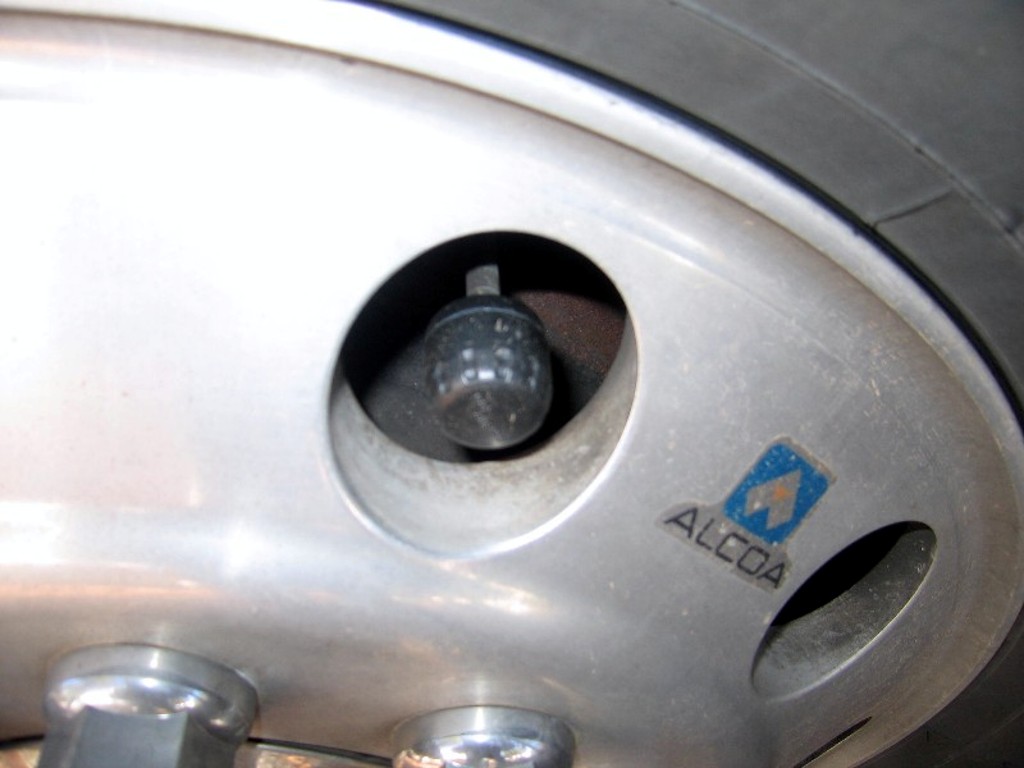 |
A PressurePro sender on Red Rover's left front wheel. | |
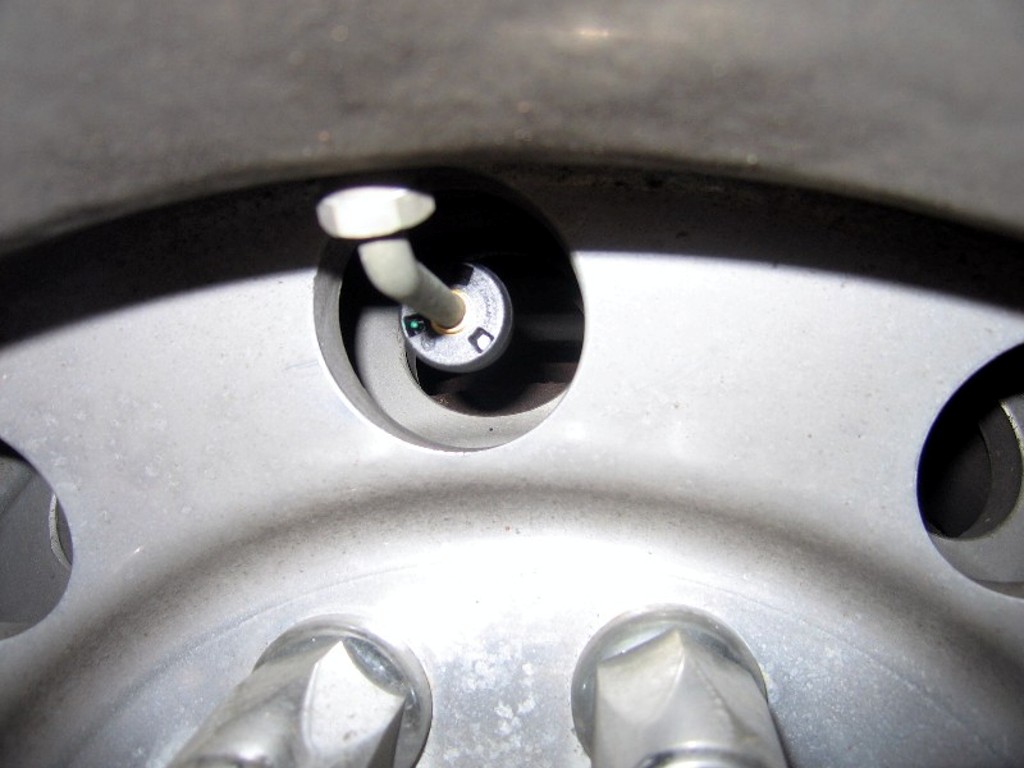 |
A PressurePro sender on Red Rover's left rear outer wheel. | |
click on images to enlarge |
||
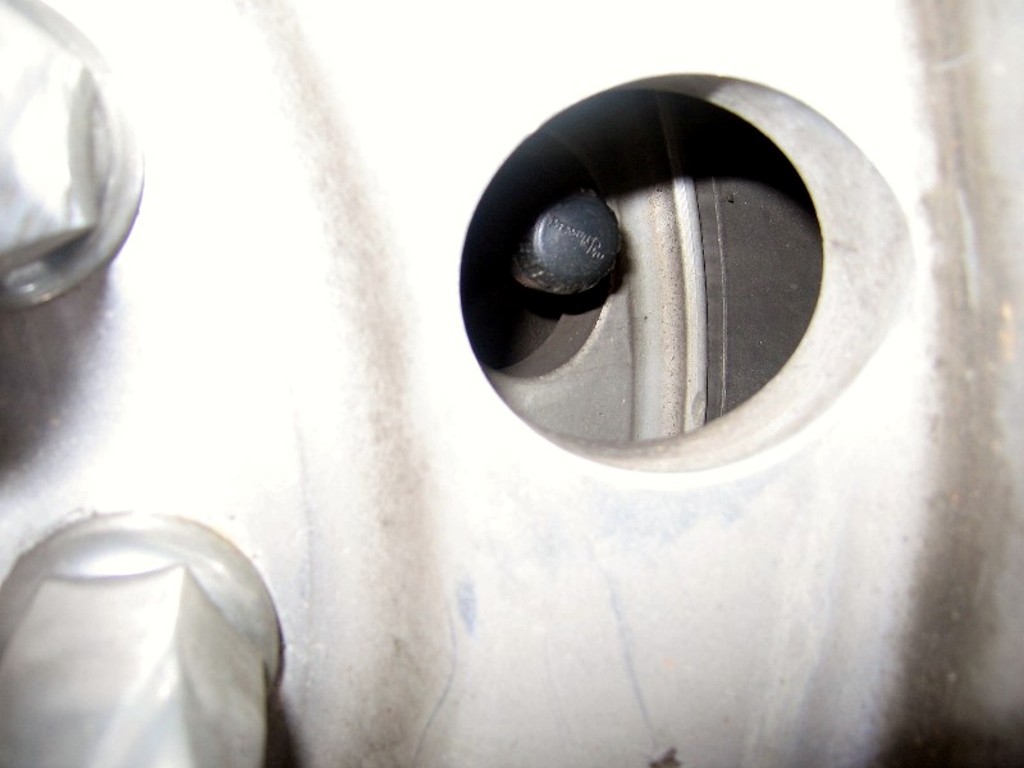 |
A PressurePro sender on Red Rover's left rear inner wheel. | |
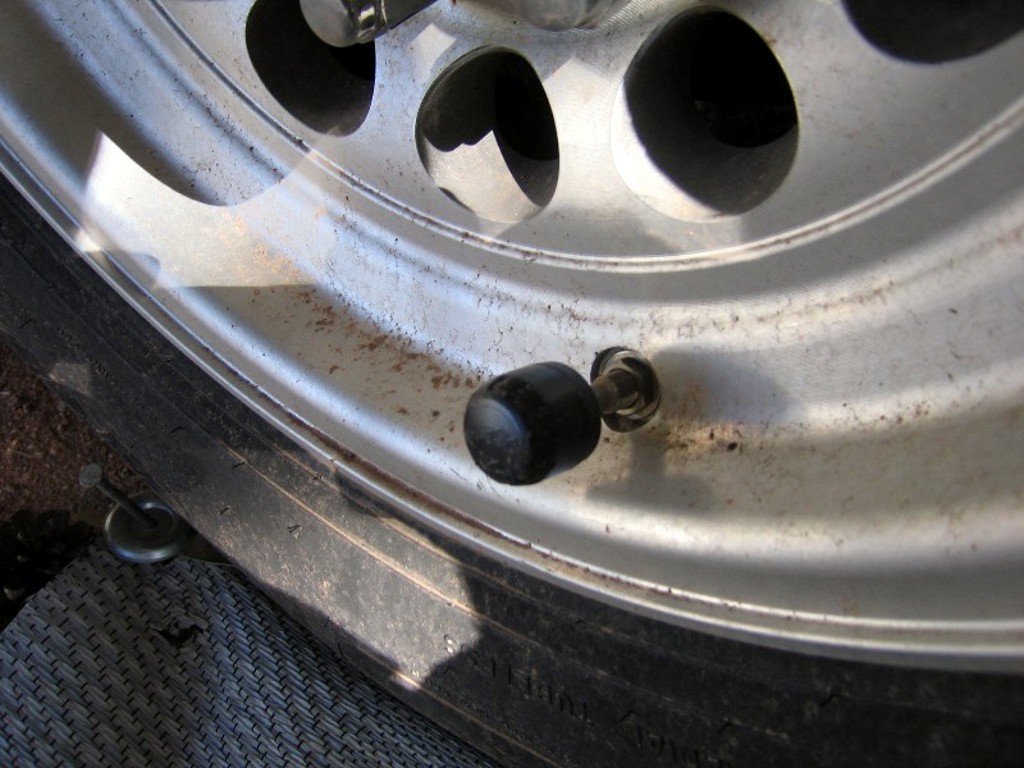 |
A PressurePro sender on one of Tige's wheels. | |
click on images to enlarge |
||
 |
Until we added Sparky to the mix, the regulator antenna for the PressurePro Monitor unit received all the
Senders. We felt pulling Sparky behind the trailer would be too much of a distance for Senders on
Sparky's tires. We decided to add a PressurePro Repeater to boost the signals from Sparky to the Monitor Unit in Red Rover. |
|
 |
We decided to locate the PressurePro Repeater in the closet next to the desk. There is a DC light in that closet. We wired a cigarette lighter like power receptacle into the light wiring. We could have cut the end off of the Repeater power cord but we wanted to keep our options for moving the Repeater open. | |
click on images to enlarge |
||
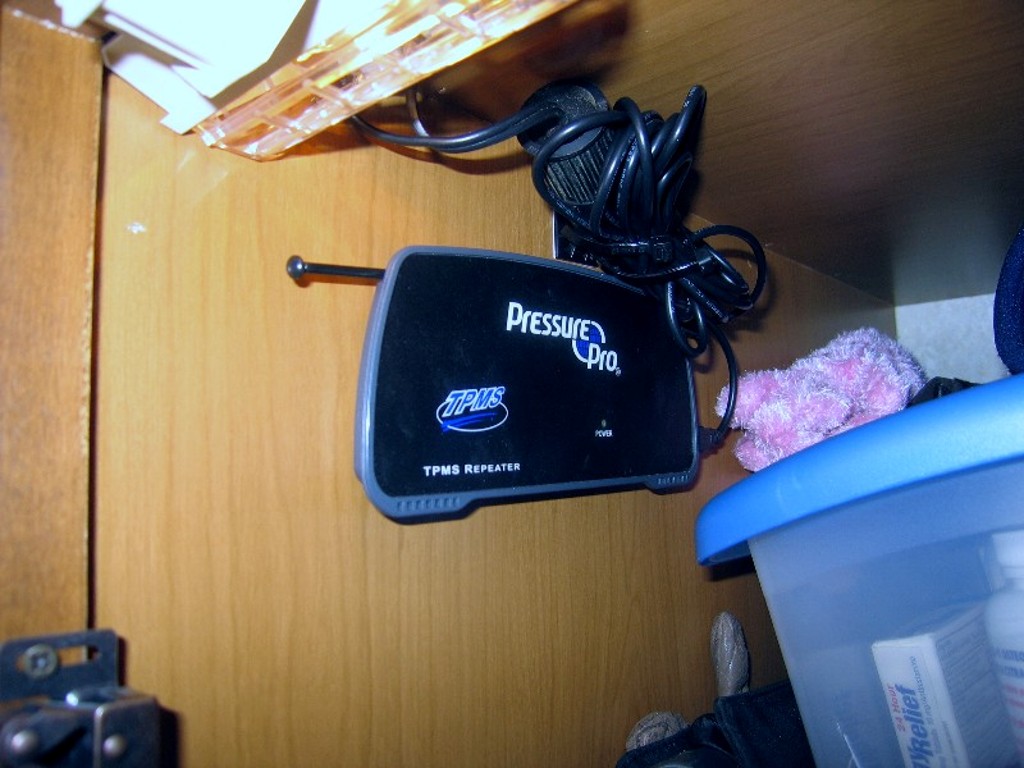 |
We used Velcro to mount the Repeater and wire tired up the power cord. We now have the Repeater mounted over the trailer wheels. |
|
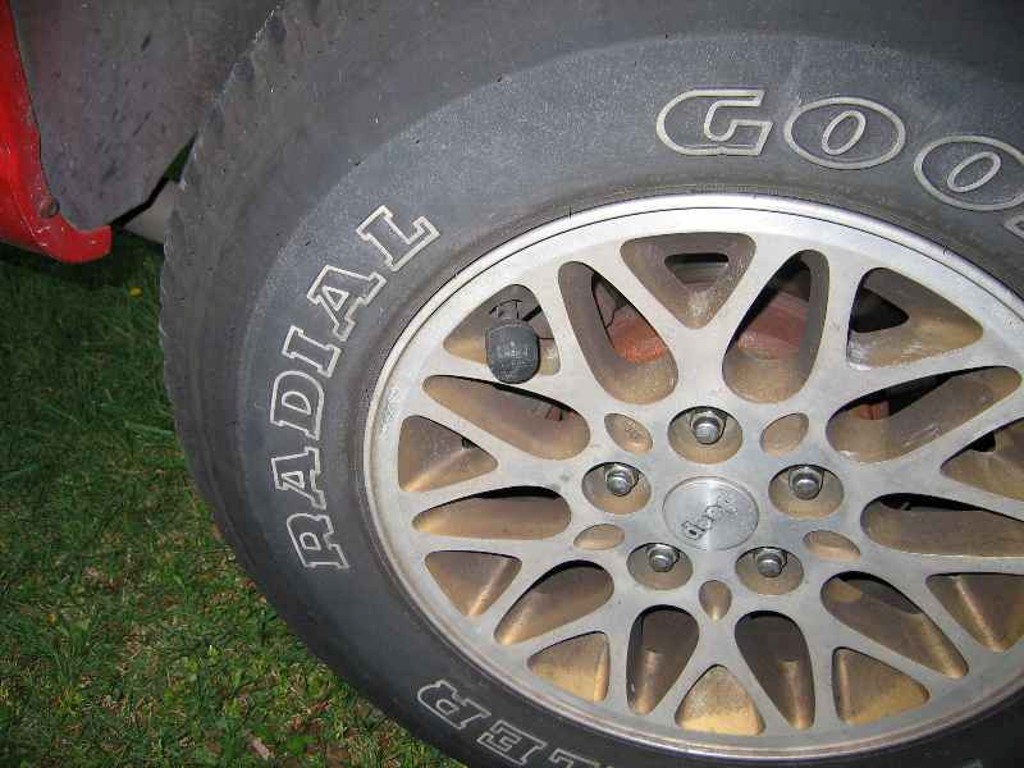 |
Here is a PressurePro sensor mounted on Sparky's wheel. We monitor all 16 (6+6+4) wheels. | |
click on images to enlarge |
||
 |
We added an external antenna just to insure reception of the sensors of the truck tires.
Red Rover's rear wheel have a lot of metal surrounding them. We simply loosened the brace for the fairing, slipped the L-Bracket that came with the PressurePro Extension Antenna and retightened. We ran the signal cable under the cab and entered the cab where the rear-view camera wires come in. We then follow the PressurePro Monitor Power Cable up the windshield to the Monitor. |
|
click on images to enlarge |
||
Staying with PressurePro |
||
|
With the purchase of our Bounder, Joey, we purchased a PressurePro system for him. TPMS System |
||
Disclaimer: The information in this site is a collection of data we derived from the vendors and from our personal experiences. This information is meant as a learning guide for you to make your own decisions Best practices and code should always be followed. The recommendations we make are from our personal experiences and we do not receive any compensation for those recommendations. |